
Tree trimming and council rules in Auckland
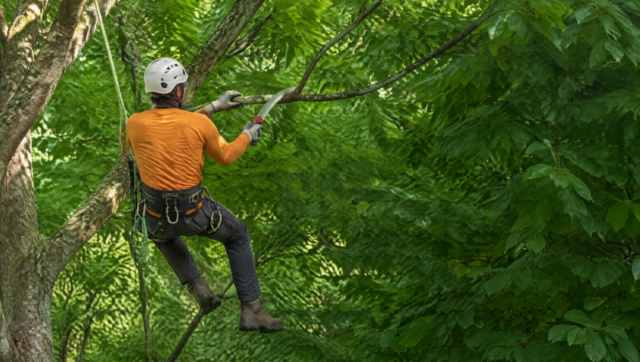
The Unitary Plan sets a trimming standard for every tree in Schedule 10. No cut branch can be more than 50mm across where it's severed, no more than 10 per cent of the live growth (the leafy, growing part of the crown) can come off in a calendar year, and the tree has to keep its natural shape, form and branch habit.
Work that goes past those limits is a restricted discretionary activity, so it needs resource consent before it starts. Deadwood (dead branches still on the tree) is treated differently: the plan permits its removal when a qualified arborist does it, and asks for a controlled activity consent when anyone else does.
That 50mm limit is small. A thumb-thick branch is well inside it; a limb you'd struggle to close your hand around probably isn't, and that's where homeowners and contractors get caught out.
Tree pruning in Auckland: what's local
Pōhutukawa by the water
Outside rural zones, rule E15 needs consent to alter any native tree over 3m tall within 20m of mean high water springs. The rule says alteration, not just removal, so ask whether a prune of a beachfront pōhutukawa needs consent even when it isn't on the notable list.
Natives on cliff tops
The same rule reaches natives over 3m tall within 20m of the top of a cliff steeper than 18 degrees, where the cliff is within 150m of mean high water springs. The sandstone bays of the North Shore are the obvious example.
Kauri offcuts stay put
Under E15, all kauri material, sawdust and woodchips included, has to stay within 3 times the radius of the canopy drip line or go to an approved landfill. Ask where the prunings will end up before the job is booked.
Under Vector's wires
Only approved utility arborists should trim within four metres of a network line. Vector does the first cut at its cost on trees it hasn't trimmed before; after that it's on the owner. Counties Energy runs a similar first cut in the far south.
Questions to ask about tree pruning in Auckland
People search for tree topping when a tree has got too tall, and that's understandable. Arborists treat topping (cutting the top and main limbs back to stubs) as poor practice: the regrowth is weakly attached, and the big wounds struggle to seal. On a notable tree it would also break the plan's natural shape requirement.
Ask instead for a crown reduction (shortening branches back to a healthy side branch) or a thin. The lopping vs pruning guide shows the difference.
When Aucklanders tend to book a prune
NIWA says gales can come in any month here but are most frequent in winter, and storms of tropical origin usually arrive between December and April. A look at big limbs over the roof before either season makes sense. Pōhutukawa owners should also watch for myrtle rust, which DOC describes as a wind-borne fungal disease.
Tree pruning in Auckland: what you can do yourself
You can
- Prune small branches you can reach with both feet on the ground, using secateurs, loppers or a pruning saw.
- Keep cars off pōhutukawa roots and the ground under the crown.
- Clean soil off boots and tools before and after working near kauri.
- Check the Notable Trees Overlay for your address.
Leave to an arborist
- Notable tree work past the plan's limits, and the consent for it.
- Natives over 3m tall near the sea or a coastal cliff top.
- Anything within four metres of a network line: approved utility arborists only.
- Branches over the roof, the driveway or the street.
Questions to ask before you say yes
- Does the work stay inside the plan's limits, or will we need consent first?
- How much live growth will come off, and where do the offcuts go?
Hiring an arborist for tree pruning in Auckland
Check the address for the Notable Trees Overlay and think about how far the tree is from the sea or a stream. If it's listed or close to water, ask the arborist to describe the cuts in writing against the plan's limits. And if a branch is anywhere near a line, ring Vector or Counties Energy before anyone touches it.