
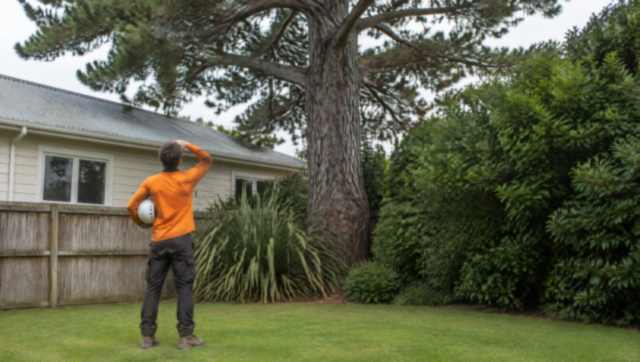
Trees and power lines in Whangārei
If anyone is in danger, call 111. Northpower runs the lines in the Whangārei and Kaipara districts; in immediate danger it asks you to stay at least 10 metres away and call Northpower. Never try to trim or cut a tree growing within 4 metres of a line. Once things are safe, photograph the damage for your insurer.
Tree health in Whangārei
Northland is kauri country, and Whangārei has old ones close to town. A H Reed Memorial Park, a remnant of the original Northland kauri forest, has maturing trees at least 500 years old. It's temporarily closed for kauri protection after Phytophthora agathidicida, the soil-borne pathogen behind kauri dieback, was found there.
Since 2 August 2022 a National Plan has set rules for kauri dieback. If your kauri look unhealthy, you must tell Tiakina Kauri or the regional council. Since 2 August 2023, earthworks within a kauri hygiene zone (three times the radius of the canopy's dripline) need an earthworks risk management plan, which sets out how vehicles, machinery, gear and boots are cleaned. Stump grinding and trenching near a kauri both move soil, so ask the arborist how they'll handle the zone.
Warning signs include bleeding gum at the base of the trunk, yellowing leaves, a thinning canopy and dead branches, though not every lesion means dieback. Our kauri dieback guide goes further.
Council tree rules in Whangārei
Notable trees are listed individually or in stands in the District Plan's Notable Trees chapter. Council's trees page says no work can be carried out on, or within the drip line of, a notable tree without a land use consent. The ePlan chapter, last updated on 2 March 2026, allows only limited pruning, such as dead wood, usually with written notice to council, and removing a notable tree is in most cases a discretionary activity needing consent. Read the two together and ask council before planning anything.
Native bush is covered too. In several zones, including rural, large lot and low density residential and the coastal environment, the plan controls indigenous vegetation clearance, and clearing more than it permits, or within 20m of a water body, generally needs a land use consent. Felling is banned in conservation covenant areas, which show on the title and the LIM.
Any work on a tree in a road reserve, park or esplanade needs Parks and Recreation approval, protected or not. Council can be reached at any hour. Our permits guide explains district plan protection more generally.
Tree removal in Whangārei: what's local
Pōhutukawa and myrtle rust
Whangārei is well inside pōhutukawa's natural range, north of Poverty Bay and north Taranaki. Myrtle rust, which can't be eradicated, infects pōhutukawa and its relatives; yellow-orange powder on the leaves is the sign to photograph and report, without touching it.
Slopes and heavy rain
Council says tropical storms and intense rain expose many areas to flooding, and that removing vegetation contributes to land instability. On a steep section, ask what taking a tree out will do to the bank before it happens.
Northpower's network
Northpower surveys its 5,500km network from the air and on the ground for tree growth, and will let you know if it finds a risky tree on your land. Keeping a private tree clear of lines is usually the landowner's job.
Neighbours
Council says trouble with a neighbour's tree is a civil matter it can't advise on. The Property Law Act 2007 lets you cut overhanging parts back to the boundary, and Community Law's advice is to talk to your neighbour first; see neighbours' trees.

Hiring an arborist in Whangārei
If there's a kauri anywhere near, we'd treat the whole job as a kauri job: clean gear, a plan for the hygiene zone, and no soil moved without thinking about where it goes. Check the Notable Trees chapter and any covenant on the title, and ask council before booking if either applies. Anything within 4 metres of a line is work for Northpower's approved contractors.