
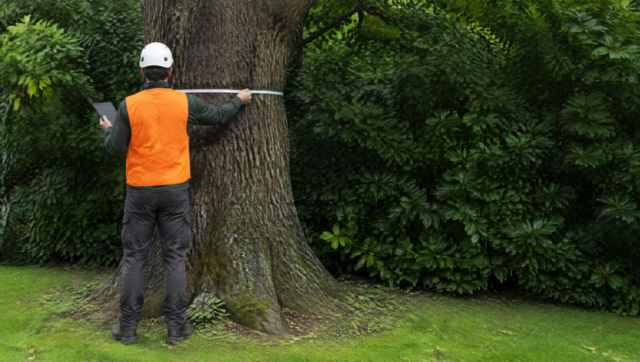
When do you need an arborist report?
For a resource consent. If the district plan protects a tree, the application has to show what you want done and why. Auckland's assessment criteria for notable trees include a tree works plan covering the effects on the tree, the methods and whether they're best arboricultural practice. An arborist writes it.
For a dead or failed protected tree. In Christchurch, a dead or structurally failed significant tree needs a Tree Removal Certificate (P-024) before it's felled, prepared by a technician arborist from council's list.
For building near trees. Auckland's notable tree rules reach the protected root zone (the ground the roots rely on), Dunedin's 2015 proposals set buildings and earthworks back from scheduled trees, and Tauranga needs consent for construction work near a protected tree. A report shows where the roots are likely to be and how the tree is kept safe during the job.
For a tree that worries you. A risk assessment tells you whether a leaning or decaying tree has to come down, or whether a smaller job will do. It's a record, too: ICNZ says a tree owner may be liable if they were negligent in not removing rotten trees.
Reports and power lines
Lines companies can't issue treefall hazard notices before 23 July 2028. When they can, each will need a moderate or high hazard assessment backed by written advice from a qualified and experienced arborist on how likely the tree is to fall. Owners can challenge an assessment through arbitration, and your own arborist's view is the obvious starting point. See trees near power lines.
What a good report covers
- Which tree and where: species, a site plan and photos.
- Health and structure: decay, deadwood, cracks, lean and root damage.
- The risk: what could fail, what's underneath, and how likely it is.
- The options, with reasons: prune, reduce, protect, monitor or remove.
- For building work: the root area to protect and how it's fenced off.
- For a consent: the methods, the effects on the tree and how they meet best arboricultural practice.
- Who wrote it, their qualifications and the date of the visit.
Who writes arborist reports?
Usually a consulting arborist, one who assesses trees and writes about them rather than only cutting them. Ask what qualifications they hold. NZQA's New Zealand Diploma in Arboriculture (Level 6), qualification 2669, trains technical specialists with an emphasis on tree risk assessment, and NZQA lists consulting and planning arborist among the jobs it leads to.
Some councils set their own bar. Christchurch's technician arborist must be competent to the Level 6 NZQA Diploma in Arboriculture standard or equivalent, and council publishes lists of approved arborists for work on protected trees.
The NZ Arboricultural Association runs a Registered Master Arborist programme and a Find a Master Arborist directory, and says it's increasingly a prerequisite for some local authorities. Insurance is worth asking about as well. Our guide to checking an arborist has more.
Questions to ask before you commission one
- Who is the report for, and will it cover what that council or company asks?
- What qualifications do you hold, and have you written reports for this council before?
- Will you look at the roots and the base as well as the crown?
- Will the report give options, or one recommendation only?
- If council comes back with questions, will you answer them?
- When will I have it in writing?
Report first, application second
Get the report before you lodge anything, not after council asks for one. It shapes what you apply for, and sometimes it shows a smaller job, such as taking out deadwood (dead branches still on the tree) or reducing one limb, does what you need. Ask council what that smaller job needs before it's booked. Our tree removal consents page links each council's rules.
Arborist reports: what you can do yourself
You can
- Write down what you know: when the tree was planted, past work, branch drops, with photos and dates.
- Find the tree in your district plan and note any schedule entry.
- Ask council what it wants the report to cover.
- Keep the finished report with your property papers.
Leave to an arborist
- Assessing health, structure and risk.
- Root investigation and any decay testing.
- Tree works plans and protection plans for building work.
- Supervising the work where council wants it.

Hiring an arborist for a report
We'd ring council first, ask exactly what the report needs to cover, and hand the arborist that list. A report written to the wrong brief usually gets done twice. And for a protected tree, we'd let the report shape the application, not the other way round.