
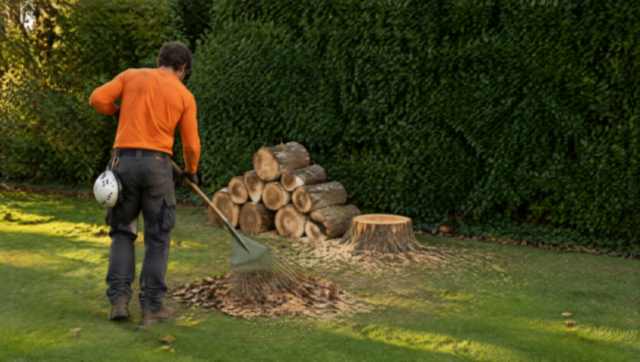
Storm damage and fallen trees in Howick
Check the schedule
Howick's notable trees are listed in the Manukau section of Schedule 10, a leftover from the years Howick was part of Manukau City. Look for your street there and on the Unitary Plan maps viewer. Removing a scheduled tree is a discretionary activity, so it needs resource consent.
Measure to the high-tide line and the cliff top
Outside the rural zones, altering or removing a native tree over 3m tall within 20m of mean high water springs needs consent. A similar rule covers natives near the top of a steep cliff close to the sea.
Look at what's downhill
Mellons Bay is two ridges joined by a wide, steep gully facing east. If your section falls away like that, note what's below the tree: the house, a neighbour's deck, a seawall, a path to the beach.
Get the method in writing
Ask whether the tree will be felled whole or taken down in sections, where the wood will land, and how the slope and the lawn will be protected.
How tree removal works in Howick
Felling means bringing the whole tree down in one go, which needs a clear, safe landing space longer than the tree. Most Howick sections don't have that, so arborists usually dismantle the tree from the top in controlled pieces. Either way it's arborist work, not something to try yourself.
The ground matters after the tree has gone. Wikipedia says the soil around Howick is mainly clay and sandstone, so on a slope ask how the stump and roots will be handled and whether grinding or leaving the stump suits the bank better. Our stump grinding page explains the choices.
Tree felling in Howick: what's local
A coast named for its gusts
Mellons Bay's Ngāi Tai ki Tāmaki name, Okokino, refers to strong gusts that were a hazard for waka along this coast. Trees on exposed bay sections take that wind first, so look over big limbs above the house after a blow.
Planted, not inherited
Early settlers found almost no trees fit for building in the district. Today Schedule 10 lists Norfolk Island pines on Frank Nobilo Drive, an oriental plane on Estuary Views, Italian cypress on Selwyn Road and oaks on Picton Street and Uxbridge Road.
Pōhutukawa with a story
At Cockle Bay the ancestor Manawatere left a red ochre mark on a pōhutukawa, a sign this was a good place to settle. Schedule 10 lists pōhutukawa on Larne Avenue and, with an oak, on Vincent Street.
Seaside sections
Cockle Bay was subdivided as a seaside resort in September 1923, and Mellons Bay got a seawall against erosion in 2016. On beachfront sections, the coastal native rule in the steps above is the one to check.
If the tree has already come down
Keep everyone clear of a fallen or split tree and anything hanging from it. If it's on a line, treat the line as live, stay 10 metres away and call Vector; if anyone is hurt or in danger, call 111. Once it's safe, photograph the damage and talk to your insurer.

Hiring an arborist in Howick
Start with the two checks you can do from home: your street in Schedule 10's Manukau section, and the rough distance from the tree to the high-tide line. If either raises a question, ask Auckland Council before getting quotes. Then have arborists look at the slope with you, and choose the one whose written plan says clearly how the tree comes down and what happens to the ground afterwards.